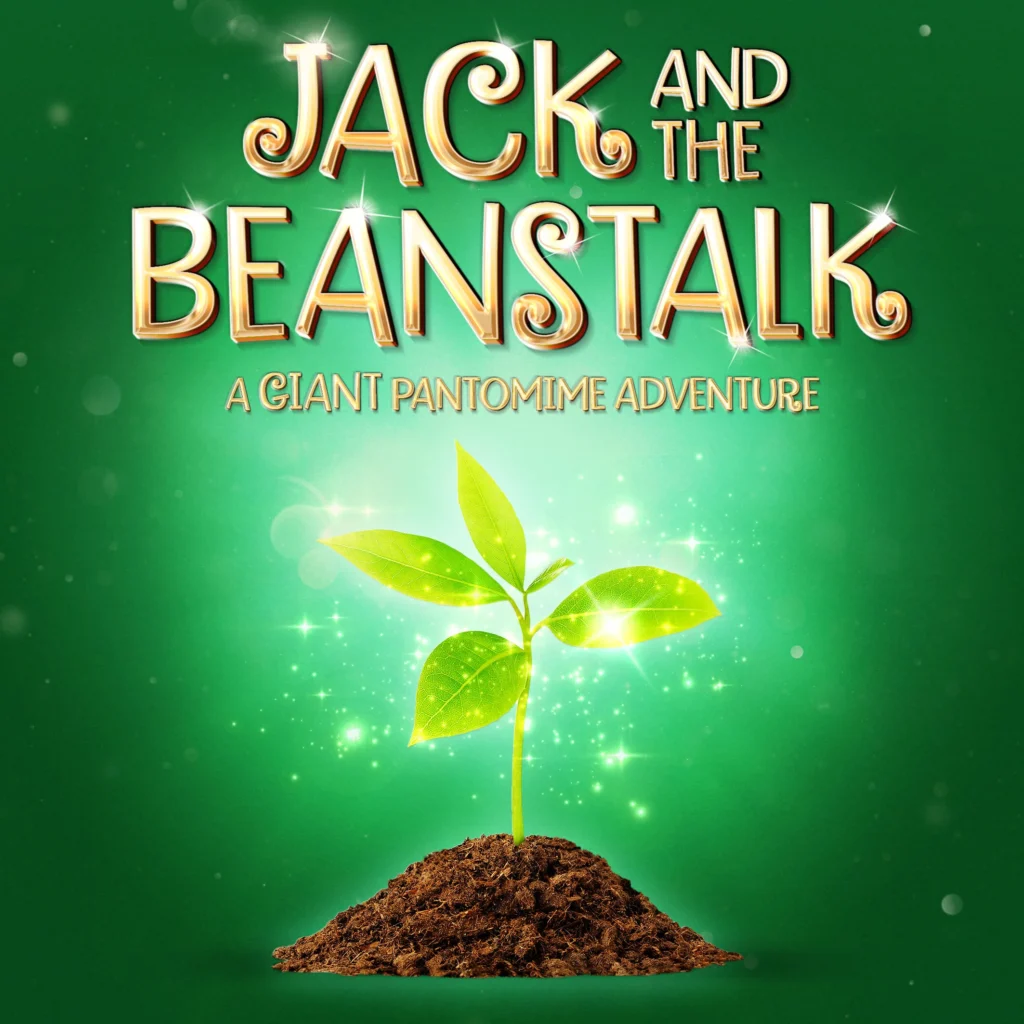
Jack and the Beanstalk Pantomime Story Explained
Jack and the Beanstalk is one of Britain’s best-loved fairy tales. With a towering beanstalk, a fearsome giant and a handful of magic beans, it has everything needed for a spectacular Christmas pantomime.
There’s a brave young hero, a villain to boo and plenty of opportunities for comedy. Add colourful costumes, magical scenery and a larger-than-life Panto Dame, and you have a traditional family favourite.
British pantomime has also given Jack and the Beanstalk its own memorable characters and traditions. From Dame Trott to the famous pantomime cow, there’s plenty to keep audiences entertained.
But what is the original Jack and the Beanstalk story, and how does it become a Christmas panto? Let’s take a closer look.
What Is the Story of Jack and the Beanstalk?
The traditional Jack and the Beanstalk story follows a poor young boy called Jack, who lives with his mother. Times are difficult, and the family has very little money. Eventually, Jack’s mother decides they must sell their cow to make ends meet. However, things don’t quite go according to plan.
On his way to market, Jack meets a mysterious stranger who offers him some magic beans in exchange for the cow. Jack agrees to the deal and returns home without any money. Unsurprisingly, his mother isn’t impressed.
She throws the beans away in frustration, believing Jack has made a terrible mistake. But overnight, something extraordinary happens. A gigantic beanstalk grows outside their home, stretching high into the clouds.
Curious about what might be waiting at the top, Jack decides to climb it. There, he discovers a mysterious land and a castle belonging to a fearsome giant. Inside the castle, Jack finds incredible treasures, including a hen that lays golden eggs and a magical harp.
However, the giant isn’t particularly pleased to discover an unexpected visitor. Jack must use his courage and quick thinking to escape. Eventually, he returns home and chops down the beanstalk, defeating the giant and securing a better future for his family.
Of course, once the story becomes a pantomime, the adventure gets considerably sillier.
Why Does Jack and the Beanstalk Work So Well as a Pantomime?
Jack and the Beanstalk has almost everything a traditional Christmas panto needs. There’s adventure, magic, comedy and a giant villain who gives audiences plenty of reasons to shout. Most importantly, the story offers some fantastic opportunities for theatrical spectacle.
From the enormous beanstalk to the giant’s castle, theatres can create memorable scenes that capture children’s imaginations. There are also plenty of opportunities for traditional pantomime comedy.
The Giant Beanstalk
One of the biggest moments in any Jack and the Beanstalk pantomime is the appearance of the beanstalk itself. What starts as a handful of ordinary-looking beans suddenly becomes something extraordinary. For pantomime producers, this creates the perfect opportunity for impressive scenery and special effects.
Some productions use elaborate moving sets, while others rely on clever lighting and theatrical tricks. Either way, the moment Jack discovers the enormous beanstalk is often a highlight of the show. For younger children, watching the magical plant stretch towards the clouds can be particularly exciting.
Dame Trott
Every great pantomime needs a Dame, and Jack and the Beanstalk has one of the most famous. Dame Trott is traditionally Jack’s mother and provides much of the show’s comedy. Like other Panto Dames, she’s usually played by a male performer wearing outrageous costumes and exaggerated makeup.
Expect enormous wigs, colourful dresses and plenty of jokes. Dame Trott is often struggling to keep her family afloat, which creates endless opportunities for comic misunderstandings. She also tends to have plenty to say about Jack’s decision to swap the family cow for a handful of beans.
If you’d like to learn more about this traditional role, our Panto Characters & Traditions Guide explains the Dame, Villain and other characters you’ll meet at a Christmas pantomime.
The Pantomime Cow
Then there’s one of the most recognisable characters in the entire production. The pantomime cow, often called Daisy, has become a much-loved part of Jack and the Beanstalk. Traditionally, the cow is played by two performers sharing a costume.
One controls the front, while the other takes responsibility for the back. As you can imagine, this creates plenty of opportunities for slapstick comedy. The cow might dance, misbehave or become involved in ridiculous situations with Dame Trott.
Although Daisy’s appearance varies between productions, the character often becomes a firm favourite with younger audiences. And, naturally, selling the family cow provides one of the story’s most memorable moments.
A Giant Everyone Can Boo
Every good pantomime needs a villain. In Jack and the Beanstalk, that role usually belongs to the Giant. He’s enormous, frightening and determined to protect his treasures. His famous cry of “Fee-fi-fo-fum!” is instantly recognisable.
However, British pantomime often takes things a little further. Some productions give the Giant a comic personality, while others make him a genuinely intimidating villain. The Giant may also have an evil assistant who causes trouble for Jack and his family.
Whatever approach the theatre takes, audiences know exactly whose side they’re supposed to be on. And when the Giant appears, there’s usually plenty of booing.
How Is Jack and the Beanstalk Adapted for Panto Comedy?
The traditional story provides the adventure. British pantomime adds the laughter. Dame Trott and the pantomime cow usually provide much of the comedy, while Jack’s adventures create plenty of opportunities for audience participation. The famous cow-selling scene can become a lengthy comedy routine filled with misunderstandings and silly jokes.
Meanwhile, Dame Trott’s attempts to manage her household often lead to slapstick situations. Modern Jack and the Beanstalk pantomimes also include popular songs, local references and jokes about current events. Some productions introduce additional characters who don’t appear in the original fairy tale.
These characters help create comedy scenes without changing the main storyline. And, of course, the audience becomes part of the adventure. Children might be encouraged to warn Jack about approaching danger, boo the villain or cheer when the hero succeeds.
If you’re attending a pantomime for the first time, our guide to Panto Etiquette explains why shouting, cheering and joining in are all part of the fun.
Famous Jack and the Beanstalk Pantomimes in the UK
Jack and the Beanstalk has been performed at theatres throughout Britain for generations. Its combination of adventure, comedy and spectacular scenery makes it particularly popular during the Christmas season. Large theatres can use the story to create impressive productions featuring enormous sets, elaborate costumes and dramatic special effects.
Smaller theatres often concentrate more heavily on traditional pantomime comedy and audience interaction. The story has also attracted well-known comedians, television personalities and entertainers over the years. However, like Cinderella and Aladdin, there isn’t one definitive version of the Jack and the Beanstalk pantomime.
Some productions make Dame Trott the main comedy attraction. Others concentrate on Jack’s adventure or the spectacular appearance of the Giant. The jokes, songs and supporting characters can also change from one theatre to another.
That’s part of the appeal. You may know how Jack’s adventure ends, but you never quite know what will happen along the way.
Is Jack and the Beanstalk a Good Pantomime for Children?
Yes. Jack and the Beanstalk can be a fantastic choice for families. The magical storyline, colourful characters and slapstick comedy make it particularly appealing to primary-school-aged children. Younger children may also enjoy the pantomime cow and Dame Trott’s ridiculous antics.
However, the Giant can sometimes appear quite frightening. Loud sound effects, dramatic lighting and darker scenes may be overwhelming for particularly sensitive children. Every production handles these moments differently, so it’s worth checking the theatre’s recommended age guidance before booking.
Our guide to the best pantomimes for different age groups can help you decide whether Jack and the Beanstalk is suitable for your family.
For a child’s first theatre visit, you may also find First Time at the Panto? What to Expect useful. It covers noise levels, running times, scary moments and audience participation.
Why Jack and the Beanstalk Remains a Panto Favourite
Few pantomime stories offer quite as much adventure as Jack and the Beanstalk. There’s a towering beanstalk, a magical land, a fearsome giant and a brave young hero. Then British pantomime adds Dame Trott, a mischievous cow, slapstick comedy and plenty of audience participation.
The result is a story that combines traditional fairy-tale magic with everything audiences love about Christmas panto. The details may change from theatre to theatre, but the heart of the story remains the same. It’s about courage, adventure and discovering that even the smallest beginnings can lead to extraordinary things.
That’s why Jack and the Beanstalk remains one of Britain’s favourite Christmas pantomimes and continues to entertain families year after year.
Want to discover another classic story? Head back to our Classic Panto Stories Explained guide, where you can explore Cinderella, Aladdin, Snow White and Dick Whittington.