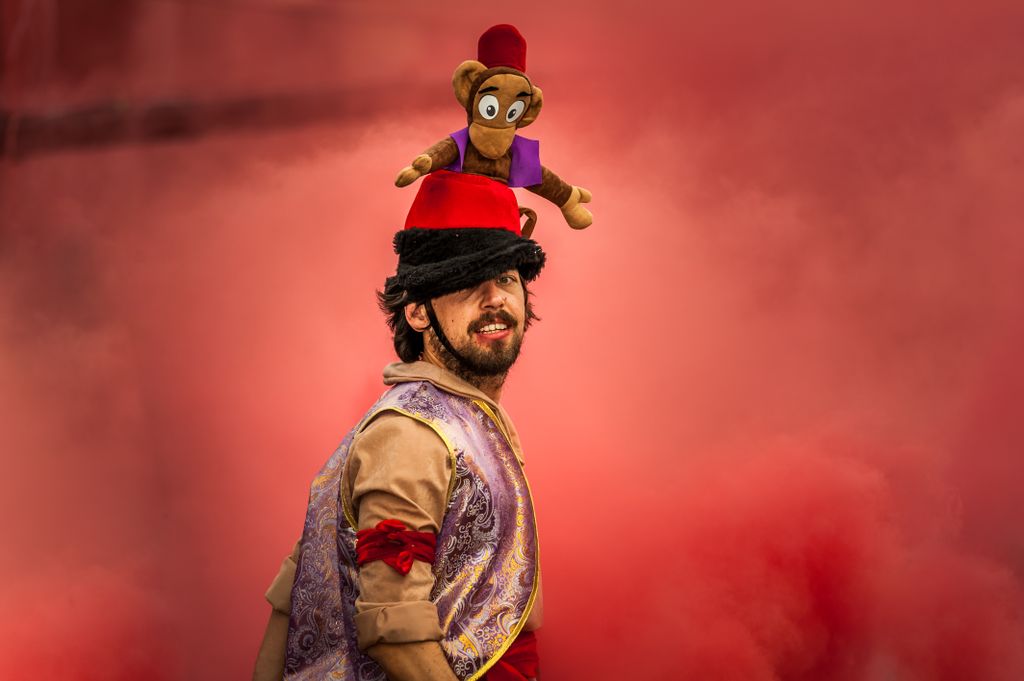
Aladdin Pantomime Story Explained
Aladdin is a story filled with magic, adventure and larger-than-life characters. So, perhaps unsurprisingly, it has become one of the UK’s most popular Christmas pantomimes.
There’s a magical lamp, a powerful Genie and a villain determined to get his hands on both. Add colourful costumes, spectacular scenery and plenty of comedy, and you have everything needed for a traditional family panto.
British pantomime has also given Aladdin some characters and traditions of its own. Widow Twankey and Wishee Washee are now almost as important to the panto as Aladdin himself.
But what is the traditional Aladdin story, and how did it become the Christmas panto we know today? Let’s take a closer look.
What Is the Story of Aladdin?
There are many different versions of Aladdin, and pantomime productions often change the details. However, the basic story follows a poor young man called Aladdin who dreams of a more exciting life.
Aladdin falls in love with a princess, but his lack of wealth and status makes their future together seem impossible. Meanwhile, a wicked sorcerer has discovered the existence of a magical lamp. He needs Aladdin to retrieve it for him from a mysterious cave.
Things don’t quite go according to plan. Aladdin becomes trapped inside the cave with the lamp. However, he soon discovers that it contains a powerful Genie who can grant wishes.
Suddenly, Aladdin has access to riches and magic beyond anything he could have imagined. Unfortunately, the villain hasn’t given up on getting the lamp.
Aladdin must outwit him, protect the people he loves and eventually defeat the villain before he can enjoy his happy ending. Of course, once the story becomes a pantomime, things get considerably sillier.
Why Does Aladdin Work So Well as a Pantomime?
Aladdin has all the ingredients needed for a spectacular Christmas panto. There’s adventure, romance, magic and a wonderfully theatrical villain. Most importantly, there’s a Genie.
The magical elements give theatres plenty of opportunities to create impressive scenery and special effects. Meanwhile, the simple good-versus-evil storyline is easy for younger audiences to follow. There are also endless opportunities for comedy.
The Magic Lamp and the Genie
The magic lamp is at the heart of the story. When Aladdin rubs it, the Genie appears and changes everything.
For pantomime producers, this creates the perfect opportunity for a spectacular entrance. Smoke, lights, sound effects and even flying sequences can all become part of the production. The Genie can be mysterious, funny or larger than life. Some productions even turn the character into one of the show’s biggest comedy roles.
Whatever approach the theatre takes, children usually know something exciting is about to happen whenever that lamp appears.
Widow Twankey
Then we have one of pantomime’s most famous characters – Widow Twankey. Traditionally played as the Panto Dame, Widow Twankey is Aladdin’s mother and usually runs a laundry.
She isn’t an important character in the original Aladdin tale. However, she has become essential to the British pantomime version. Expect enormous costumes, outrageous jokes and plenty of interaction with the audience.
The laundry setting also provides endless opportunities for slapstick comedy involving washing, bubbles and anything else the writers can throw around the stage.
If you’d like to discover more about the Dame and other traditional roles, our Panto Characters & Traditions Guide explains the characters you’re likely to meet at a Christmas panto.
Wishee Washee
Many British versions of Aladdin also include Aladdin’s brother, Wishee Washee. Again, he’s a pantomime creation rather than an important character from the traditional story.
Wishee Washee usually becomes the loveable comic sidekick. He talks directly to the audience, encourages children to join in and often finds himself at the centre of the show’s slapstick routines.
He’s exactly the type of character younger children quickly fall in love with.
A Villain Everyone Can Boo
Every good panto needs someone to boo. In Aladdin, that role is traditionally filled by Abanazar, the wicked sorcerer who wants the magic lamp.
Abanazar is perfectly suited to pantomime. He can make dramatic entrances, plot ridiculous schemes and react furiously whenever the audience boos him.
Children know exactly whose side they’re supposed to be on. And, naturally, the louder you boo, the better.
How Is Aladdin Adapted for Panto Comedy?
The basic Aladdin story provides the adventure. British pantomime adds the chaos. Widow Twankey and Wishee Washee usually provide much of the comedy, while Abanazar gives audiences someone to boo throughout the performance.
The traditional laundry setting can also lead to some wonderfully messy slapstick scenes. However, every production is different. Modern Aladdin pantomimes often include chart songs, local references, celebrity jokes and references to popular television programmes.
The Genie can also be adapted to suit whoever is playing the role. Most importantly, the audience becomes part of the story. Characters might ask children for help, encourage everyone to shout warnings or lead the theatre in a song.
If you’re new to all this audience participation, our guide to Panto Etiquette explains when shouting is not only allowed – but actively encouraged.
Famous Aladdin Pantomimes in the UK
Aladdin has been a favourite at theatres across Britain for generations. Large theatres can use the magical storyline to create spectacular productions with elaborate scenery, special effects and impressive flying sequences.
Smaller theatres can concentrate more heavily on traditional comedy and audience interaction. The title has also attracted countless well-known comedians, television personalities and entertainers over the years.
However, like Cinderella, there isn’t one definitive version of the Aladdin pantomime. Characters can change. Jokes are rewritten. Songs are updated. Even parts of the story may be completely different from one production to another.
That’s part of its appeal. You may know exactly how Aladdin’s story ends, but you never quite know what’s going to happen along the way.
Is Aladdin a Good Pantomime for Children?
Yes. Aladdin can be a fantastic choice for families. The magic, colourful characters and comedy make it particularly appealing to primary-school-aged children.
However, younger children may find Abanazar or some of the darker cave scenes slightly intimidating. Every production handles these moments differently, so it’s worth checking the theatre’s recommended age guidance before booking.
Our guide to the best pantomimes for different age groups can also help you choose a show that suits your children.
For a child’s first theatre visit, you may also find First Time at the Panto? What to Expect useful. It covers noise levels, scary moments, running times and audience participation.
Why Aladdin Remains a Panto Favourite
Few pantomime stories offer quite as much freedom as Aladdin. There’s a magical Genie, an evil sorcerer, romance, adventure and one very important lamp.
Then British pantomime adds Widow Twankey, Wishee Washee, slapstick comedy and an audience that’s expected to shout throughout the show. The result is a story that can feel completely different every Christmas while still remaining unmistakably Aladdin.
That’s why Aladdin remains one of Britain’s favourite Christmas pantomimes and continues to introduce new generations of children to the magic of panto.
Want to discover another classic story? Head back to our Classic Panto Stories Explained guide, where you can explore Cinderella, Snow White, Jack and the Beanstalk and Dick Whittington.